RYA Day Skipper standard — precise, complete
The electrical distribution system supplies power to start the engine, charge batteries, run essential systems, and provide warnings and alarms. A Day Skipper is not expected to repair electrical systems, but must understand how power flows, what is normal, and how to isolate faults safely.
1) Purpose of the Electrical System (RYA concept)
The system must:
-
-
Deliver high current for engine starting
-
Supply stable power for engine instruments and alarms
-
Recharge batteries while running
-
Distribute power safely to onboard services
-
Protect wiring and equipment from overload
-
Loss of electrical power affects starting, navigation, communication, and safety systems.
2) Main Components and Power Flow
2.1 Batteries
-
-
Store DC electrical energy (usually 12V or 24V).
-
Common arrangements:
-
Engine (start) battery
-
Domestic (service) battery bank
-
-
Batteries may be isolated or combined via switches or split-charge devices.
-
2.2 Battery Isolator Switches
-
-
Allow batteries to be connected or disconnected.
-
Used for:
-
Normal operation
-
Emergency isolation
-
Maintenance and fire response
-
-
Must normally be ON before starting engine.
-
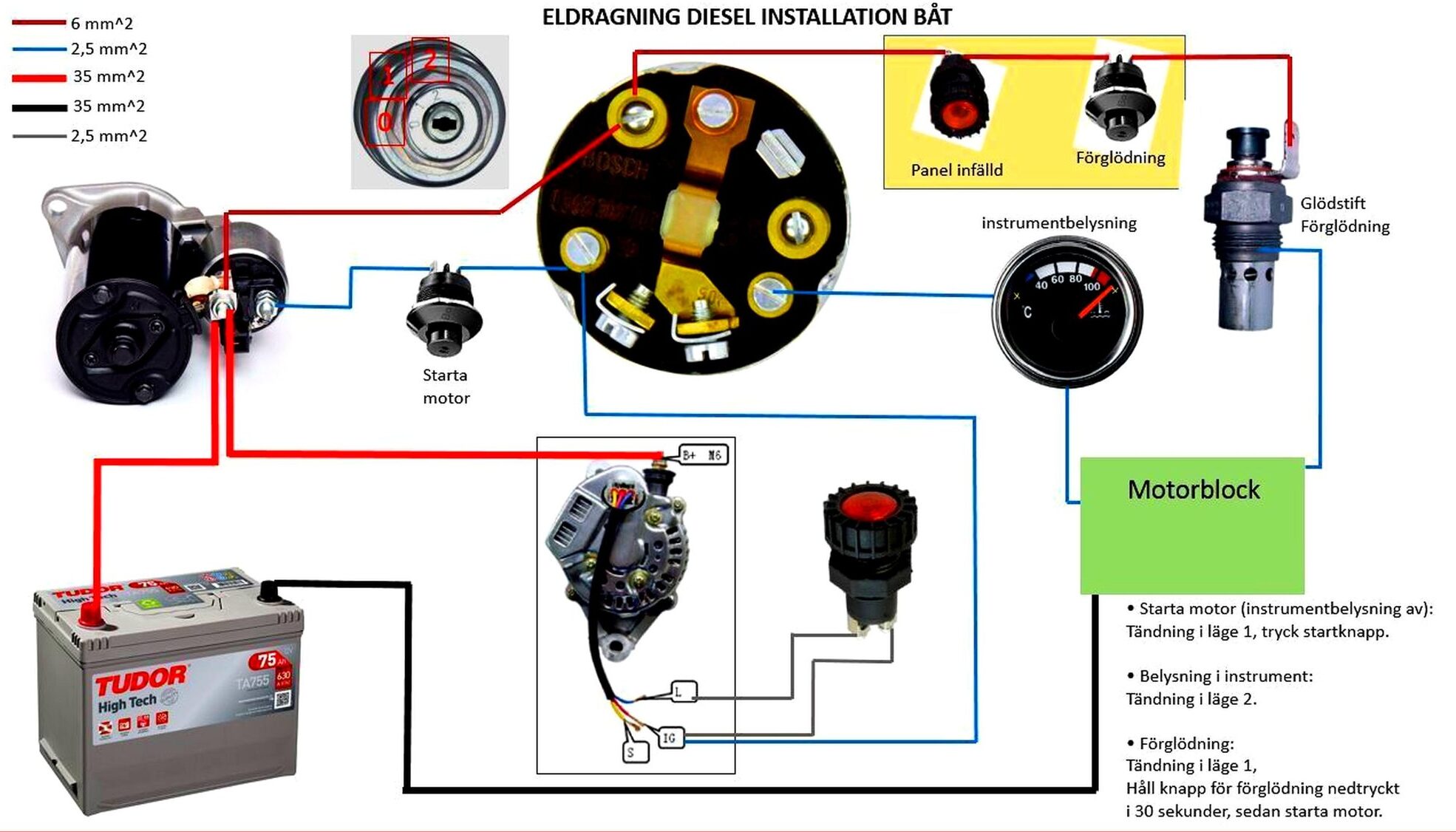
2.3 Starter Circuit (High Current)
-
-
Battery → isolator → starter motor → engine block (return)
-
Draws very high current for short duration.
-
Poor connections cause:
-
Slow cranking
-
Clicking sounds
-
Failure to start
-
-
2.4 Alternator
-
-
Engine-driven generator.
-
Produces AC electricity.
-
Internal diodes convert AC to DC.
-
Charges batteries while engine is running.
-
Drive belt condition is critical.
2.5 Voltage Regulator
-
-
Controls alternator output voltage.
-
Prevents battery overcharging or undercharging.
-
Often built into alternator.
-
2.6 Charging Distribution
-
-
Split-charge relay, diode splitter, or voltage-sensitive relay (VSR).
-
Directs alternator output to:
-
Start battery
-
Domestic bank
-
-
Prevents batteries discharging into each other when engine is off.
-
2.7 Distribution Panel
-
-
Supplies power to onboard systems:
-
Navigation lights
-
Instruments
-
Pumps
-
Electronics
-
-
Each circuit protected by:
-
Fuse or
-
Circuit breaker
-
-
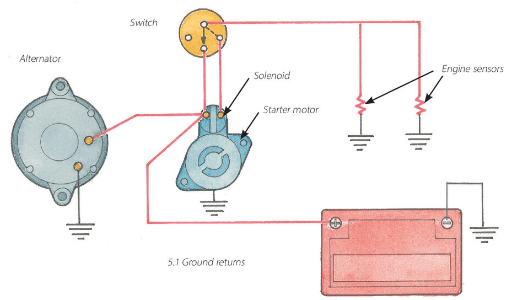
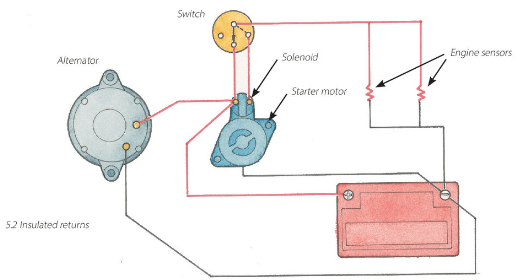
2.8 Earthing / Return Path
-
-
Electrical current must return to battery.
-
Systems may be:
-
Common negative (engine block as return)
-
Insulated return (separate negative cables)
-
-
Poor earthing causes erratic faults.
-
3) Engine Instrumentation and Alarms
Typical engine-related electrical circuits:
-
-
Starter motor control
-
Stop solenoid
-
Oil pressure sensor
-
Coolant temperature sensor
-
Charge warning circuit
-
Alarm buzzer
-
RYA emphasis: alarms are indicators, not causes.
4) Normal Operation Sequence
-
-
Battery isolator ON
-
Panel lights illuminate (self-test)
-
Engine started (starter motor draws current)
-
Alternator begins charging
-
Charge warning light goes OFF
-
Electrical loads supplied and batteries replenished
-
5) Common Electrical Faults and Symptoms
5.1 Flat or weak battery
-
-
Slow or no cranking
-
Instruments dim or dead
-
5.2 Charging failure
-
-
Charge warning light stays ON
-
Battery voltage does not rise
-
Cause may be:
-
Broken alternator belt
-
Failed alternator
-
Loose wiring
-
-
5.3 Poor connections
-
-
Intermittent faults
-
Heat at terminals
-
Voltage drop under load
-
5.4 Blown fuse / tripped breaker
-
-
Loss of individual circuit
-
Protection working as designed
-
6) Day Skipper Checks (RYA practical standard)
Before start:
-
-
Battery isolators ON
-
No burning smells
-
No loose or corroded terminals
-
After start:
-
-
Charge warning light OFF
-
Voltmeter indicates charging (approx. 13.5–14.5V)
-
No alarms sounding
-
Underway:
-
-
Monitor charging status
-
Avoid excessive electrical load at low engine RPM
-
7) Fault Response (RYA approach)
-
-
Identify symptom
-
Reduce electrical load
-
Check obvious causes (isolators, belt, breakers)
-
Do not bypass fuses or protection
-
Isolate system if overheating or fire risk
-
Electrical fires spread rapidly—early isolation is critical.
8) Safety Notes
-
-
Never short battery terminals
-
Remove metal jewellery when working near batteries
-
Ventilation required for battery compartments
-
Battery acid is corrosive
-
9) Revision Summary (Speakable)
Battery → isolator → starter / distribution panel.
Engine running → alternator → regulator → batteries → services.
If the alternator fails, electricity becomes a finite resource.